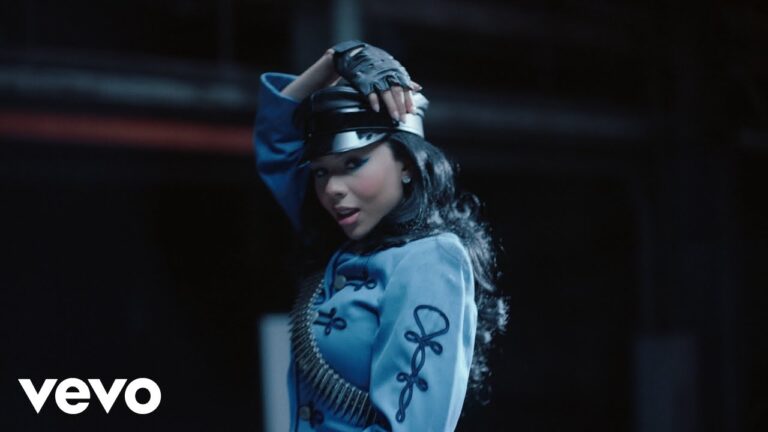
Asake – MCBH
Asake has become one of the most recognisable voices in modern Nigerian music, and his ability to blend Yoruba musical traditions with Afrobeats, street pop, Fuji influences and contemporary production has helped him build a sound that feels both familiar and remarkably different. With Asake – MCBH, Asake once again demonstrates why his music continues to attract attention beyond Nigeria. The project represents another opportunity to examine the artist’s creative evolution, his relationship with Yoruba culture, his vocal identity and his growing confidence as one of Africa’s most influential contemporary musicians.
MCBH is not the kind of Asake release that should be judged simply by asking whether every song sounds like a potential club anthem. One of the most interesting things about Asake’s music is that he has gradually created a musical world of his own. His songs often carry energetic production, catchy melodies and memorable phrases, but underneath that surface is an artist who understands atmosphere. He knows how to make a song feel like an experience rather than just another collection of beats and lyrics. MCBH continues that approach and gives listeners another opportunity to appreciate the artistic personality that has made Asake such an important figure in Afrobeats.
One of the strongest elements of Asake’s music is his relationship with the Yoruba language. At a time when many African artists are attempting to make their music as universally accessible as possible, Asake has shown that embracing his linguistic and cultural identity can actually become a major advantage. His use of Yoruba does not make his music feel restricted to Yoruba speaking audiences. Instead, it gives his songs a distinct character. Even listeners who do not understand every word can connect with the rhythm, delivery, emotion and musical energy.
That cultural identity is important when reviewing MCBH because Asake has never sounded like an artist who is desperately trying to remove his roots from his music. His success has largely come from doing the opposite. He has taken elements that have existed in Nigerian music and traditional Yoruba sounds for generations and placed them inside modern production. The result is a style that feels contemporary without completely abandoning where it came from.
Asake’s vocal delivery remains one of his biggest strengths. His voice is not built around conventional perfection. Instead, he uses texture, rhythm, repetition and emotion to make his performances memorable. There is a rawness to his delivery that makes his music immediately identifiable. You can often hear an Asake song within seconds because his vocal approach has become part of the production itself.
This is particularly important in a music industry where numerous artists are competing for attention with increasingly polished productions. A recognisable voice can be more valuable than an expensive beat. Asake has that recognisable identity. Whether he is singing softly, chanting, stretching a phrase or attacking a rhythm with energy, there is usually something unmistakably Asake about the performance.
Another interesting feature of MCBH is the way Asake continues to balance street sensibilities with mainstream ambition. His music has always had a strong connection to everyday Nigerian experiences, particularly the hustle, ambition, pressure and desire for a better life that define the lives of many young people. At the same time, his music is polished enough to compete on international platforms.
That balance is not easy to achieve. An artist can become too commercial and lose the raw quality that initially attracted listeners. Another artist can remain too underground and struggle to reach a wider audience. Asake has managed to operate somewhere between those two worlds. His music can work at a party, in a car, through headphones or during a quiet moment when someone simply wants to listen to music and reflect.
The production also deserves attention. Asake’s sound has always benefited from producers who understand how to create space for his unusual vocal patterns and rhythmic choices. Rather than making the beat compete with the singer, the best Asake productions give his voice enough room to become part of the rhythm. This is one of the reasons his songs often feel highly energetic even when the lyrical content itself is relatively simple.
His music frequently relies on repetition, but repetition in Asake’s case is rarely accidental. Repeated phrases can become hooks, chants and rhythmic instruments at the same time. This approach makes his music highly memorable. A listener may not remember every line after hearing a song once, but there is a good chance they will remember the hook or a particular vocal phrase.
This quality is one of the reasons Asake has become so effective in the streaming era. Modern listeners are constantly exposed to new music, and songs have to establish an identity quickly. Asake understands the importance of creating moments that stick. MCBH benefits from that same instinct.
Lyrically, Asake continues to explore themes that are familiar within his broader catalogue. Ambition, success, relationships, enjoyment, struggle, confidence and the realities of life frequently appear in his music. His approach is not necessarily to turn every song into a complicated philosophical statement. Instead, he often communicates through short phrases, cultural references, emotional expressions and repetition.
Some listeners may argue that this approach sometimes sacrifices lyrical depth. That criticism is fair to consider. Not every song needs to contain complex poetry, but listeners who prefer detailed storytelling may occasionally find themselves wanting more substance. However, judging Asake solely by traditional songwriting standards would also miss what makes his music effective.
His greatest strength is often the total experience. The beat, voice, language, rhythm and attitude work together. His music is designed to make people feel something. Sometimes that feeling is excitement. Sometimes it is confidence. Sometimes it is nostalgia. Sometimes it is simply the pleasure of hearing a sound that feels culturally familiar while still sounding modern.
MCBH also demonstrates the importance of consistency in Asake’s career. Breaking through in the Nigerian music industry is difficult, but remaining relevant after the initial breakthrough can be even harder. The audience eventually becomes familiar with an artist’s formula and begins looking for evidence of growth. Asake has faced that challenge by continuing to experiment within the boundaries of his established identity.

The most impressive aspect of his evolution is that he has not needed to completely reinvent himself every time he releases new music. Instead, he has expanded the possibilities within his existing sound. This is often a more sustainable approach to artistic development. The goal is not necessarily to sound completely different from the previous release. The goal is to sound recognisably like yourself while showing that you have learned something since the last project.
There is also something refreshing about Asake’s confidence. His music rarely sounds apologetic. He does not appear to be asking listeners for permission to occupy space in the industry. That confidence has become part of his brand. It is especially relevant to young listeners who connect with songs about ambition, success and overcoming difficult circumstances.
At the same time, the confidence in his music reflects a wider story about Nigerian popular culture. Nigerian artists are increasingly showing that local cultural identity does not have to be sacrificed for international recognition. Afrobeats has become globally influential partly because artists have exported their own identities rather than simply copying sounds from other parts of the world.
Asake is an important part of that movement. His use of Yoruba language, Fuji inspired elements and Nigerian street culture demonstrates that international appeal can grow from authenticity. MCBH therefore sits within a much larger conversation about what African music can become when artists stop treating their cultural roots as limitations.
From a replay value perspective, Asake’s music is particularly strong because his songs often reveal themselves gradually. The first listen may be about the beat and the energy. Subsequent listens can reveal additional vocal details, background sounds, lyrical references or production choices. This gives the music longevity.
However, MCBH may not appeal equally to everyone. Listeners who prefer slow, acoustic songwriting or highly detailed narratives may find Asake’s approach less satisfying. His music is heavily dependent on rhythm, atmosphere and personality. If those qualities do not connect with the listener, the overall experience may feel repetitive.
For fans of Afrobeats, Nigerian street pop and Yoruba influenced contemporary music, however, the appeal is much easier to understand. Asake represents a generation of Nigerian artists who have demonstrated that music can be deeply local and globally relevant at the same time. He has helped push a sound that might once have been considered too regional into international conversations.
Perhaps the most important thing about MCBH is that it reinforces Asake’s identity rather than simply chasing whatever happens to be trending. In a fast moving industry, artists can easily become distracted by viral sounds. Asake’s strongest releases tend to work because they sound like they belong to him. That sense of ownership is one of the most valuable things an artist can develop.
Ultimately, an Asake project should be evaluated not only by individual songs but by the world the artist creates around them. His music carries a particular energy, language, rhythm and attitude. MCBH continues that musical journey and offers another reminder that Asake has become much more than a successful Afrobeats singer. He is part of the ongoing evolution of Nigerian popular music.
The project may divide listeners in certain areas, especially when it comes to lyrical complexity and repetition, but those differences of opinion are also part of what makes Asake interesting. His music generates reactions. People dance to it, debate it, quote it and sometimes criticise it passionately. An artist capable of creating that kind of response is rarely insignificant.
Asake’s greatest achievement may ultimately be his ability to make cultural identity commercially powerful. He has shown that Yoruba language, Nigerian street culture and traditional musical influences can coexist with modern Afrobeats production and international ambition. MCBH fits comfortably into that larger artistic journey.
For listeners discovering Asake for the first time, MCBH provides another window into the creative personality behind one of Nigeria’s most distinctive modern sounds. For longtime fans, it offers another opportunity to follow his development and ask where he can take his music next. And for anyone interested in the future of African popular music, Asake remains an artist worth watching closely.
As a listening experience, MCBH is best approached with an open mind. Do not listen to it expecting a traditional pop album where every song follows the same songwriting structure. Listen instead for rhythm, atmosphere, cultural identity, vocal personality and the small details that make Asake’s music recognisable. That is where much of its appeal lies.
Asake has already established a musical identity that many emerging artists would spend years trying to create. The real question now is not whether he has a sound. He clearly does. The bigger question is how far he can stretch that sound without losing the qualities that made people fall in love with it in the first place.
MCBH is another chapter in that story. It reinforces Asake’s position as one of the artists helping shape the sound and direction of contemporary Nigerian music. Whether you are a devoted fan, a casual Afrobeats listener or someone simply curious about why Asake continues to dominate conversations around African music, the project deserves a listen.
In the end, Asake’s greatest weapon remains authenticity. He sounds like himself. In an industry where imitation can sometimes be easier than originality, that matters. MCBH reminds listeners that music does not always need to abandon its roots to travel far. Sometimes the strongest passport an artist can have is the culture they carry with them.
Asake – MCBH
Recommended: Earn From Your Phone
- Easy Dollar Maker — earn in dollars uploading AI images and videos from your phone ($17). Check it out
- Video Editing Blueprint for Beginners — learn video editing and start creating content ($10). Check it out
- CapCut Pro (Lifetime Access) — the pro video editor for your TikToks and music videos ($3.40). Check it out
Disclosure: These are affiliate links. If you buy through them, I may earn a commission at no extra cost to you.