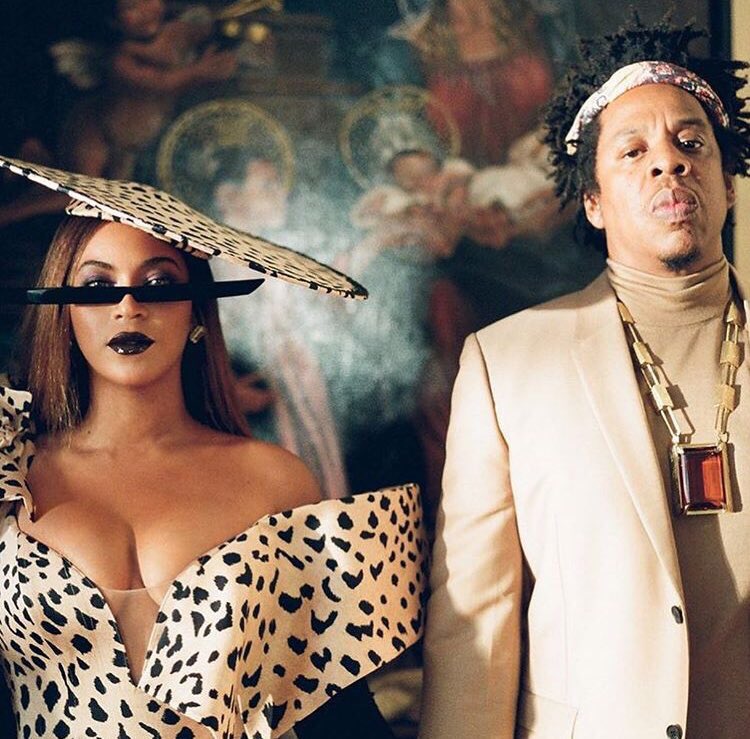
Beyoncé – MOOD 4 EVA
“MOOD 4 EVA” is one of those rare cross continental records that feels less like a commercial collaboration and more like a cultural summit. Featuring Beyoncé, JAY-Z, Childish Gambino, and Oumou Sangaré, the track stands as one of the most confident statements from the soundtrack of The Lion King: The Gift. Rather than functioning as a simple pop tie in, it asserts itself as a celebration of Black excellence, global identity, and luxurious self assurance, wrapped in a sonic palette that blends African rhythmic traditions with modern hip hop, R&B, and cinematic production. Beyoncé – MOOD 4 EVA
From the opening moments, the song signals its intention to exist in a space of elevation rather than imitation. The production is airy yet grounded, combining West African percussion textures with a smooth, almost dreamlike groove. There is a sense of ceremonial pride embedded in the rhythm, as though each beat is designed to honor ancestry while simultaneously projecting forward into the future. This duality becomes the emotional spine of the track. It is not simply about celebration in the superficial sense, but about legacy, inheritance, and the idea of thriving across generations. Beyoncé – MOOD 4 EVA
Beyoncé’s presence on the track is both commanding and fluid. She does not overexert herself vocally; instead, she glides over the production with controlled confidence, embodying the central thesis of the song: abundance, peace, and permanence. Her delivery feels intentional, almost regal, as if she is not just performing but curating an atmosphere. There is a subtle shift in her tone compared to her more traditional pop records. Here, she leans into restraint, allowing space for the instrumental and guest features to breathe while anchoring the record’s thematic core.
JAY-Z enters with his signature ease, delivering verses that reflect wealth not just as material success but as a form of generational stability and cultural power. His presence adds a grounded contrast to the ethereal quality of the production. Where Beyoncé elevates, he stabilizes. His flow is unhurried, almost conversational, reinforcing the idea that success at this level is no longer something to chase but something to inhabit. Rather than competing for attention, his verse reinforces the unity of the record, aligning with its overarching message of arrival and permanence.
Childish Gambino introduces a different layer of texture entirely. His approach is more experimental, slightly eccentric, and emotionally expressive. He bridges the gap between traditional hip hop cadence and alternative musical phrasing, bringing a playful yet introspective energy. His contribution helps prevent the track from becoming too polished or distant. Instead, he injects personality and unpredictability, reminding the listener that mood, identity, and creativity are not fixed states but evolving experiences. His presence expands the emotional range of the song, adding dimension to its otherwise regal structure. Beyoncé – MOOD 4 EVA
The inclusion of Oumou Sangaré is one of the most significant artistic choices in the record. Her voice carries the weight of tradition, heritage, and cultural authority. When she enters the track, it feels like the ancestral foundation of the entire composition is being revealed. Her vocal tone is rich and grounded, rooted in the musical traditions of Mali, and it provides a spiritual anchor for the song. Rather than being treated as a feature in the conventional sense, her presence feels foundational, as though the track is built around her cultural and sonic identity. This decision elevates the record from global fusion to cultural dialogue. Beyoncé – MOOD 4 EVA
Lyrically, “MOOD 4 EVA” is not concerned with narrative complexity or storytelling in a linear sense. Instead, it operates as a mantra of affirmation. The repetition of themes like longevity, joy, luxury, and freedom creates a rhythmic ideology rather than a traditional lyrical progression. The message is simple but powerful: this is a state of being that transcends temporary success. It is about permanence in identity, confidence in heritage, and the right to exist joyfully without apology.
One of the most compelling aspects of the track is how it reframes luxury. In many mainstream records, luxury is often depicted as excess or aspiration. Here, however, it is reframed as inheritance and affirmation. Luxury is not something newly acquired but something culturally embedded and historically grounded. This reframing is significant because it shifts the narrative from consumerism to identity, suggesting that wealth is not just material but also spiritual, artistic, and ancestral.
The production design reinforces this message through its layered structure. The beat does not rush. It unfolds gradually, allowing each artist to occupy space without overcrowding the sonic field. There is a sense of intentional spacing, almost like a curated exhibition rather than a traditional pop arrangement. Every percussive element feels placed with care, contributing to an atmosphere that is immersive rather than aggressive. The soundscape feels expansive, designed to evoke images of open landscapes, royal courts, and celebratory gatherings.
Vocally, the chemistry between the artists is not defined by direct interaction but by thematic alignment. They are not trading bars in a competitive sense; instead, they are contributing different perspectives to a unified concept. Beyoncé represents control and elegance. JAY-Z represents stability and achievement. Childish Gambino represents creativity and emotional nuance. Oumou Sangaré represents tradition and ancestral depth. Together, they construct a multi dimensional narrative that spans geography, genre, and generation.
The song also carries a strong cinematic quality, which is fitting given its association with The Lion King: The Gift. It does not feel like a standalone pop single but rather like a scene in a larger visual and thematic universe. The mood it creates is aspirational yet grounded, suggesting a world where cultural pride and personal success coexist without contradiction. This cinematic quality is reinforced by the way the track builds atmosphere rather than hooks, prioritizing immersion over immediacy.
Emotionally, “MOOD 4 EVA” sits in a rare space where confidence is not performative but internalized. There is no desperation in its tone, no need for validation. Instead, it communicates arrival. This emotional stance is particularly powerful in contemporary music, where narratives often revolve around struggle or pursuit. Here, the struggle is absent, not because it is denied, but because it has already been transcended within the logic of the song’s universe.
Another notable aspect is how the track balances global influence without diluting authenticity. The integration of West African musical elements is not superficial or decorative. It is structurally embedded into the rhythm and feel of the song. This approach respects the origins of the sounds being used and ensures that the collaboration does not feel extractive. Instead, it feels participatory, as if different musical worlds are meeting on equal terms.
Ultimately, “MOOD 4 EVA” is less about entertainment in the conventional sense and more about identity construction. It asks the listener to consider what it means to exist in a state of joy that is not conditional, a confidence that is not fragile, and a cultural pride that is not performative. By bringing together four distinct artistic voices, the track becomes a statement about unity without uniformity, suggesting that strength can come from difference when guided by a shared vision.
In its entirety, the record stands as a testament to what happens when artistry is prioritized over trend, and vision is placed above formula. It is not designed to dominate charts or chase viral moments. Instead, it is designed to endure, to exist as a mood, a statement, and a cultural marker. “MOOD 4 EVA” ultimately succeeds because it understands that music at its highest level is not just sound, but identity, memory, and imagination woven together into something larger than the sum of its parts.
Beyoncé, JAY-Z, Childish Gambino, Oumou Sangaré – MOOD 4 EVA
Recommended: Earn From Your Phone
- Easy Dollar Maker — earn in dollars uploading AI images and videos from your phone ($17). Check it out
- Video Editing Blueprint for Beginners — learn video editing and start creating content ($10). Check it out
- CapCut Pro (Lifetime Access) — the pro video editor for your TikToks and music videos ($3.40). Check it out
Disclosure: These are affiliate links. If you buy through them, I may earn a commission at no extra cost to you.