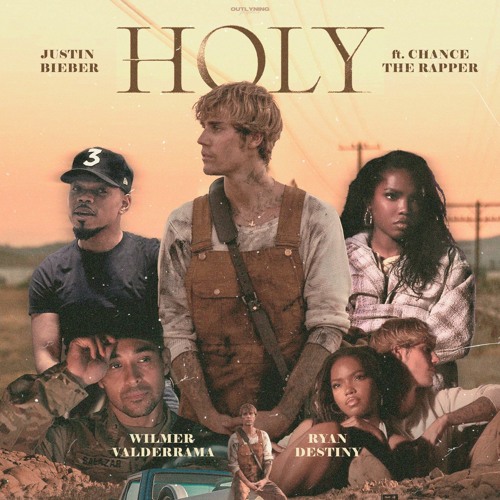
Justin Bieber – Holy ft. Chance The Rapper
The landscape of modern pop music has witnessed numerous thematic pivots, but few are as fascinating as the deliberate integration of spiritual devotion with secular romance. When global pop superstar Justin Bieber released Holy featuring long time friend and collaborator Chance The Rapper, he officially signaled a transition into a deeply reflective, mature era of his career. Serving as the triumphant lead single for his sixth studio album Justice, the record operates as a vibrant, gospel-infused anthem that aims to redefine the standard pop love song. By merging the soaring choral arrangements of contemporary Christian music with the sleek production parameters of mainstream pop, the track creates a highly accessible sonic space that honors both marital fidelity and divine faith. This critical analysis examines the structural engineering, thematic balance, vocal dynamics, and cultural impact of the single, showing how it serves as a milestone in the evolution of modern devotional pop.
Musically, the song is a brilliant experiment in sonic texture, constructed by an elite assembly of hitmakers including Jon Bellion, Jorgen Odegard, Tommy Brown, Michael Pollack, and Steven Franks. The production departs dramatically from the minimalist R&B of Bieber’s previous album, opting instead for a rich, organic soundscape built around a beautiful piano progression. This foundational piano line provides a steady emotional grounding, allowing the track to build progressively from a quiet, intimate confession into a grand, celebratory experience. The true genius of the instrumentation lies in its use of space, as the production team allows the natural resonance of the piano and occasional warm synth pads to carry the emotional weight before introducing a booming, foot-stomping kick drum. This rhythmic framework mimics the traditional call-and-response pacing of a church congregation, inviting the listener into a shared communal experience rather than a detached auditory observation.
The vocal execution on the track represents some of the most controlled, expressive singing of Justin Bieber’s adult career, showcasing an impressive growth in his interpretive capabilities. Bieber has always possessed a naturally silky tone, but here he infuses his delivery with a distinct, raspy urgency that perfectly mirrors the spiritual themes of the writing. In the verses, his voice remains close and conversational, delivering lines with a tender vulnerability that highlights the deeply personal nature of the narrative. As the arrangement moves toward the explosive chorus, his vocals rise effortlessly into a powerful, full-bodied register, backed by a magnificent choir arranged with the help of gospel legend Kirk Franklin. The interplay between Bieber’s sharp pop sensibilities and the sweeping, multi-layered harmonies of the choir creates a brilliant auditory contrast, wrapping the core message of the track in a blanket of authentic soulfulness.
Lyrically, the song operates on a fascinating dual plane, constantly blurring the lines between romantic adoration and religious salvation. The opening lines establish a stark contrast between worldly skepticism and personal transformation, with the protagonist acknowledging his flaws while looking toward a brighter path. The conceptual heart of the track rests entirely on the metaphor of the hook, where the physical and emotional connection with a partner is described as feeling holy. This songwriting choice serves a dual purpose, elevating human romance into a sacred covenant while simultaneously using the language of faith to articulate feelings that transcend basic physical attraction. By framing a devoted relationship through references to going down to the river, the lyrics evoke vivid imagery of cleansing, rebirth, and spiritual alignment, suggesting that a true and healthy partnership can serve as a conduit for spiritual awakening.
The entry of Chance The Rapper at the midpoint of the track adds an invaluable layer of narrative depth, shifting the song’s perspective from a melodic reflection to a rhythmic testimonial. Chance has long been celebrated for his ability to seamlessly blend hip-hop with overt expressions of faith, making him the absolute ideal creative counterweight for this specific project. His verse functions as a vibrant, syncopated journey through the realities of commitment, dealing directly with the institutional and personal struggles that couples face in the real world. Rather than keeping the conversation purely abstract or idealistic, Chance grounds his lyricism in concrete realities, speaking on the sanctity of formal marriage and the beauty of honoring a father figure. His delivery is incredibly dynamic, moving effortlessly from rapid-fire, percussive flows to melodic, spoken-word cadences that inject a burst of raw, unfiltered energy into the song’s midsection.
Beyond their individual contributions, the genuine chemistry between the two artists elevates the record far beyond a typical commercial collaboration. Having previously joined forces on numerous massive hits, their creative shorthand is readily apparent in the way their performances complement one another. Chance’s verse does not feel like an afterthought or a random addition designed to satisfy streaming algorithms; it behaves as a vital narrative bridge that propels the track toward its grand final chorus. The transition out of the rap verse and back into the swelling choral arrangement is handled with exceptional fluidity, ensuring that the song maintains its emotional momentum from the first note to the final fading chord. This organic synergy is a testament to their real-world friendship, giving the performance a sense of sincerity that cannot be manufactured in a studio.
The visual representation of the track, directed by acclaimed filmmaker Colin Tilley, acts as a crucial narrative extension that significantly enhances the song’s overall impact. Described by Bieber as a short film rather than a traditional music video, the visual narrative casts him as an industrial oil worker who loses his job during a time of widespread economic hardship, while his partner, played by Ryan Destiny, works tirelessly as an essential healthcare nurse. When the couple is ultimately evicted from their home, their bleak situation is redeemed by a random act of kindness from a returning soldier, portrayed by Wilmer Valderrama. This cinematic storyline beautifully recontextualizes the lyrics, proving that the holiness celebrated in the song is not just a passive emotion felt during prosperous times, but a resilient, sacrificial commitment that shines brightest in the face of intense societal and economic suffering.
From a strategic market positioning perspective, the track is a masterfully optimized piece of contemporary art, engineered to bridge multiple distinct demographics within the global streaming landscape. By combining standard pop sensibilities with gospel elements and hip-hop cadences, the song effortlessly appeals to diverse radio formats, including mainstream Top 40, urban contemporary, and inspirational playlists. This broad stylistic versatility allows the track to accumulate massive streaming numbers worldwide without alienating any specific segment of the artist’s vast audience. It provides mainstream pop listeners with a wholesome, uplifting alternative to the cynical themes often found on the charts, while offering faith-based audiences a contemporary record that aligns with their core values without sacrificing top-tier production quality.
The track also deserves immense credit for its role in shaping the broader cultural conversation surrounding the evolution of pop superstardom. For decades, mainstream pop culture has often associated maturity with cynicism, dark themes, or hyper-sexualized branding. By stepping forward with an open celebration of faith, stability, and marital devotion, Justin Bieber successfully subverted these industry expectations, offering a new blueprint for how an artist can grow gracefully in the public eye. The song proves that themes of hope, gratitude, and spiritual grounding possess an immense commercial viability, showing that modern audiences are deeply hungry for art that inspires a sense of community and higher purpose amid a chaotic world.
Ultimately, Holy by Justin Bieber and Chance The Rapper stands as a timeless, beautifully executed masterpiece of modern devotional pop that continues to resonate powerfully within the global musical landscape. Every component of the record, from the foundational brilliance of Jon Bellion’s melodic construction to the soaring power of the Kirk Franklin-assisted choir and the authentic grit of Chance’s verse, works in absolute harmony to deliver a unified message of hope. It remains a definitive turning point in Bieber’s artistic journey, marking the exact moment he successfully transformed his global platform into a space for profound personal testimony and creative maturity. For anyone seeking to understand the incredible potential of merging mainstream pop excellence with deep spiritual sincerity, this landmark collaboration serves as the definitive masterclass.
Justin Bieber – Holy ft. Chance The Rapper
Recommended: Earn From Your Phone
- Easy Dollar Maker — earn in dollars uploading AI images and videos from your phone ($17). Check it out
- Video Editing Blueprint for Beginners — learn video editing and start creating content ($10). Check it out
- CapCut Pro (Lifetime Access) — the pro video editor for your TikToks and music videos ($3.40). Check it out
Disclosure: These are affiliate links. If you buy through them, I may earn a commission at no extra cost to you.