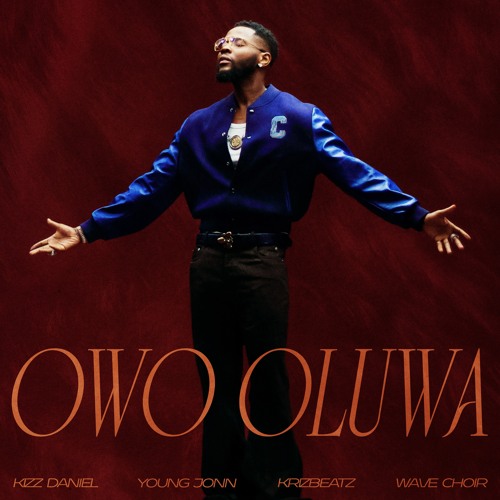
Kizz Daniel – Owo Oluwa ft. Young Jonn, Krizbeatz, Wave Choir
Kizz Daniel has always had a way of making songs that are easy to sing along to, but “Kizz Daniel Owo Oluwa” takes that familiar accessibility and points it in a more spiritual direction. Featuring Young Jonn, Krizbeatz and Wave Choir, the song is built around gratitude, faith, divine protection and the joy that comes from recognising God’s presence in one’s life. Released in September 2026 through FlyBoy INC in partnership with EMPIRE, the song serves as Kizz Daniel’s first official single of the year and introduces a noticeably spiritual dimension to his current musical direction.
The title “Owo Oluwa” immediately gives listeners an idea of what to expect. The Yoruba phrase is commonly understood in the context of the song as referring to the hand of God. Rather than using that idea as a small lyrical reference buried somewhere in the record, Kizz Daniel makes it the foundation of the entire song. The repeated declaration that the hand of the Lord is present becomes the emotional centre of the record, making the song feel less like a conventional Afrobeats release and more like a musical expression of thanksgiving.
What immediately stands out about Kizz Daniel Owo Oluwa is that it does not completely abandon the sound that has made Kizz Daniel one of Nigeria’s recognisable Afrobeats voices. There is still rhythm, melody and enough bounce to make the record enjoyable beyond its message. However, the subject matter changes the atmosphere. Instead of making romance, nightlife or material celebration the central theme, Kizz Daniel turns his attention towards gratitude and faith.
That decision gives Owo Oluwa a different emotional identity.
The opening establishes the song’s reflective nature before Kizz Daniel moves into a message about discovering the realities of life, receiving guidance and finding reassurance in God. One particularly interesting element is the reference to dancing like David. That reference connects the contemporary Afrobeats record to a familiar biblical image of uninhibited praise. Kizz Daniel is essentially presenting dancing and singing as expressions of gratitude rather than merely entertainment.
This is where the song becomes more interesting than its title might initially suggest. It is not simply a song saying that God is good. It attempts to communicate what gratitude feels like after going through uncertainty and eventually finding peace.
The phrase “I’m relieved” is particularly important to understanding the emotional direction of the record. Relief is different from excitement. Excitement can come from receiving something new, while relief often comes after surviving something difficult. That distinction gives Owo Oluwa an emotional layer that listeners can connect with even if their personal experiences are completely different from Kizz Daniel’s.
There is something very Nigerian about the way the song communicates this feeling. Nigerians often mix English, Nigerian Pidgin and indigenous languages naturally when discussing faith, success, hardship and gratitude. Kizz Daniel takes advantage of that linguistic flexibility. Yoruba expressions carry some of the emotional weight, while English and Pidgin make the message accessible to a wider audience.
This combination helps prevent the song from feeling overly formal.
Krizbeatz deserves significant attention for the production because the instrumental has to perform a difficult balancing act. The record needs to sound spiritual without becoming a conventional church song. At the same time, it needs enough rhythmic energy to remain recognisably contemporary African pop. The production achieves this by creating space for the vocals and choir while maintaining a danceable foundation. Reports on the release identify Krizbeatz as the producer, with songwriting credits including Kizz Daniel, Young Jonn and Krizbeatz.
The production is arguably one of the reasons Owo Oluwa works.
Imagine the same lyrics placed over a completely different instrumental. The record could easily have become too heavy, too slow or too obviously structured as a gospel song. Instead, Krizbeatz allows the message to move with a contemporary rhythm. The result is something that can be listened to during personal reflection, played in a social setting or simply enjoyed as another Afrobeats record.
That flexibility is one of the song’s strongest characteristics.
Young Jonn also brings an interesting dimension to Kizz Daniel Owo Oluwa. His presence is not simply there to increase the number of big names attached to the song. His melodic contribution fits into the overall atmosphere without completely taking the record away from Kizz Daniel. This is important because collaborations involving several established names can sometimes feel overcrowded. Owo Oluwa largely avoids that problem by allowing each contributor to occupy a clear space within the record.
Young Jonn and Kizz Daniel also have musical history, which makes their collaboration feel less random. There is already an understanding of melodic Afropop between the two artists, and that familiarity helps the record maintain a natural flow.
Then comes Wave Choir.
The choir is arguably the element that most dramatically changes the character of Owo Oluwa. Without the choir, the song could have been interpreted primarily as a spiritual Afrobeats record performed by Kizz Daniel and his collaborators. With the choir, the song gains a communal quality.
The difference is significant.
A solo singer saying that God has been faithful feels personal. A choir repeating the same idea makes it feel collective. Suddenly, the listener is not just hearing Kizz Daniel’s personal expression of gratitude. The arrangement creates the impression of many voices joining together in the same declaration.
This is why Wave Choir fits the record so naturally.
The choir does not appear to be competing with Kizz Daniel for attention. Instead, its function is to enlarge the emotional space of the song. The vocals give certain sections a praise atmosphere while allowing Kizz Daniel to remain the principal voice. Contemporary music sometimes struggles when too many elements are introduced into a relatively short song, but Owo Oluwa keeps its central message clear.
The repetition of the title phrase is another smart songwriting decision. Some listeners may initially consider the repetition simple, but simplicity is actually part of the record’s strength. A thanksgiving song does not necessarily need complicated lyrical gymnastics. Sometimes the most effective approach is to establish one central idea and repeat it until it becomes memorable.
Owo Oluwa does exactly that.
The central message is easy to understand. God has been present. God has provided protection. There is a reason to be grateful. There is a reason to celebrate. There is no need to remain consumed by worry.
That simplicity makes the song accessible to people who may not ordinarily listen to gospel music.
This is also where Kizz Daniel’s understanding of popular music becomes important. He does not present the song as though listeners must sit down and study it before appreciating it. The rhythm pulls you in first. The melody keeps you there. The message becomes clearer as the song progresses.
It is an approach that makes Owo Oluwa capable of crossing musical boundaries.
The song has been described by several outlets as Afro gospel or gospel inspired, although it remains firmly connected to Afrobeats and contemporary African pop. BellaNaija, for example, characterised the record as an Afro gospel anthem centred on gratitude, faith and protection, while other coverage has similarly highlighted its combination of spiritual themes and dance oriented production.
Personally, this middle ground is what makes the song interesting.
Owo Oluwa is not trying to sound like a traditional worship session. Neither is it pretending that its spiritual message does not exist. It occupies the space in between. It takes the energy and accessibility of Afrobeats and uses them to communicate something about faith.
That approach reflects how African music continues to evolve.
African artists increasingly move between genres without treating those genres as completely separate worlds. An artist can create a song that contains gospel themes, Afrobeats rhythms, indigenous language, pop melodies and contemporary production techniques without needing to choose only one identity.
Kizz Daniel Owo Oluwa is a good example of this musical flexibility.
Another interesting aspect of the record is its timing. The song had reportedly been circulating through snippets on platforms including TikTok and Facebook before the official release, meaning some listeners were already familiar with parts of it before the full version became available.
That pre release familiarity matters because music consumption has changed dramatically. Songs are no longer always introduced to listeners through radio, television or the traditional album cycle. A short snippet can circulate for months before the official release, allowing audiences to become familiar with a hook long before they hear the complete recording.
Owo Oluwa benefited from that kind of anticipation.
When the full song arrived, listeners were not encountering a completely unknown record. Some had already heard enough of the song to become curious about the complete version. That creates a different relationship between an artist and the audience.
The song also arrives as part of a broader 2026 chapter for Kizz Daniel. Contemporary reports identify it as his first official single of the year and connect it with the rollout of his forthcoming project Radio Gidi.
That makes Owo Oluwa more than just another standalone release. It potentially gives listeners an indication of the kind of musical conversations Kizz Daniel is interested in having at this stage of his career.
Of course, one song cannot completely define an upcoming album.
However, it can establish an atmosphere.
And the atmosphere here is gratitude.
There is also an interesting contrast between the commercial nature of Afrobeats and the spiritual subject matter of the record. Afrobeats has become one of Africa’s most commercially successful musical exports, often associated with celebration, lifestyle, romance, ambition and nightlife. Owo Oluwa takes that commercially accessible framework and uses it to talk about something more personal and spiritual.
That does not make the song less commercial. If anything, it demonstrates how spiritual messages can be packaged in a format that remains accessible to mainstream listeners.
For me, one of the most appealing qualities of Kizz Daniel Owo Oluwa is that it does not sound like it is trying too hard to convince the listener of its message. The song is celebratory rather than argumentative. It does not spend the entire duration explaining faith. Instead, it expresses faith through music.
That is an important distinction.
Music often works best when it allows the listener to experience an emotion rather than simply telling the listener what emotion to have.
The production creates movement. Kizz Daniel provides the personal voice. Young Jonn adds another melodic layer. Krizbeatz shapes the sonic environment. Wave Choir provides the communal energy. Together, those elements create a record that feels bigger than a conventional solo performance.
There are, however, aspects of the song that some listeners may find limiting. Its reliance on a repeated central phrase means people looking for extremely complex songwriting may find the lyrical approach straightforward. The song is not designed around intricate storytelling or multiple narrative turns. Its power comes from repetition, melody, atmosphere and emotional clarity.
But that is not necessarily a weakness.
In a song built around praise and thanksgiving, repetition can be part of the point.
A worship song can repeat a phrase because the phrase itself is the message. Owo Oluwa borrows that principle while placing it inside an Afrobeats environment.
Another thing I appreciate about the record is how culturally grounded it feels. The use of Yoruba alongside English and Pidgin prevents the song from becoming a generic international pop record with African production. The cultural identity remains visible throughout the music.
That is particularly important for contemporary African music because global appeal does not necessarily require abandoning local identity.
In fact, songs often become more memorable when they sound like they came from somewhere specific.
Kizz Daniel understands this.
His delivery remains recognisable, but the subject matter gives that familiar voice a different purpose. Instead of using his melodic style primarily to discuss love, attraction or celebration, he uses it to communicate gratitude.
The result is a song that can appeal to both Kizz Daniel’s existing audience and listeners who enjoy inspirational African music.
Kizz Daniel Owo Oluwa is therefore an interesting addition to his catalogue because it demonstrates another side of his musical personality. It is spiritual without becoming inaccessible, danceable without losing its message and contemporary without completely disconnecting itself from Nigerian cultural expression.
The involvement of Young Jonn, Krizbeatz and Wave Choir also makes the record feel deliberately constructed rather than casually assembled. Each contributor brings something different to the final sound. Krizbeatz provides the production framework, Young Jonn contributes melody and vocal presence, while Wave Choir supplies the collective praise atmosphere. Kizz Daniel remains at the centre, carrying the main message.
Ultimately, Kizz Daniel Owo Oluwa is a song about gratitude disguised as a danceable Afrobeats record. Its central idea is simple, but the combination of rhythm, Yoruba expression, contemporary melodies, choir arrangements and spiritual themes gives that idea enough personality to stand out.
It is the kind of song that can mean different things to different listeners. Someone may hear it as an Afro gospel record. Another person may simply enjoy the beat. Someone else may connect deeply with the idea of surviving difficult seasons and finally being able to say they are relieved.
That flexibility is valuable.
Kizz Daniel Owo Oluwa does not need to be overcomplicated to make an impression. Its greatest strength lies in knowing exactly what it wants to communicate and building the music around that message.
For listeners who enjoy Kizz Daniel’s melodic style but want something more reflective, Owo Oluwa offers a refreshing change of direction. For Afrobeats listeners, it demonstrates how spiritual themes can exist comfortably within modern African pop. For fans of inspirational music, it provides a rhythmic alternative to conventional praise music.
Most importantly, the song leaves the listener with a feeling of celebration.
Not celebration simply because something material has been acquired, but celebration because there is gratitude for having made it through another season.
And perhaps that is the real heart of Kizz Daniel Owo Oluwa.
Sometimes, after everything life throws at you, the biggest song you can sing is simply a song of thanks.
Kizz Daniel – Owo Oluwa ft. Young Jonn, Krizbeatz, Wave Choir
Recommended: Earn From Your Phone
- Easy Dollar Maker — earn in dollars uploading AI images and videos from your phone ($17). Check it out
- Video Editing Blueprint for Beginners — learn video editing and start creating content ($10). Check it out
- CapCut Pro (Lifetime Access) — the pro video editor for your TikToks and music videos ($3.40). Check it out
Disclosure: These are affiliate links. If you buy through them, I may earn a commission at no extra cost to you.