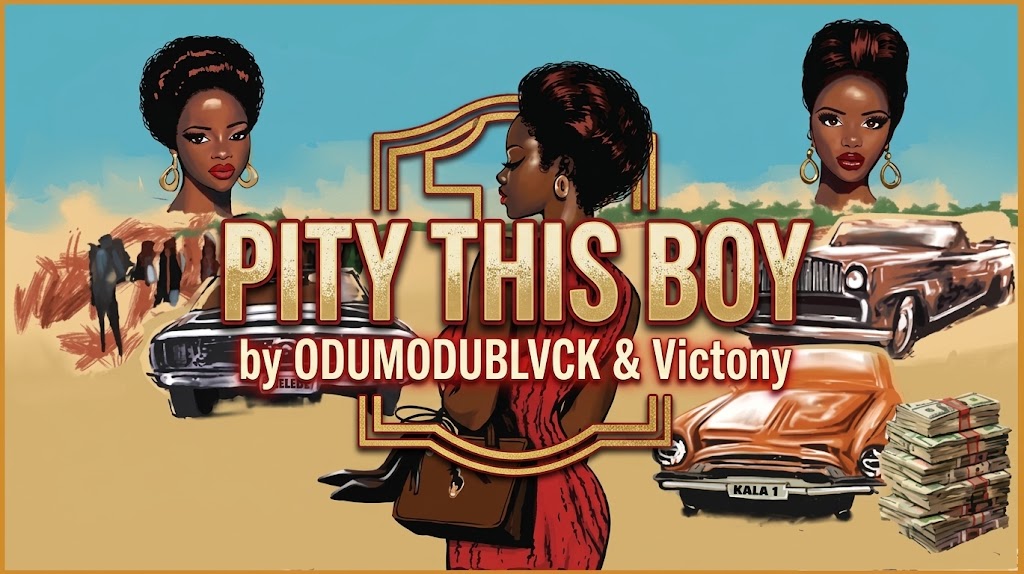
PITY THIS BOY by ODUMODUBLVCK & Victony
PITY THIS BOY by ODUMODUBLVCK & Victony is the kind of collaboration that immediately makes sense once the music starts playing. Released on 7 February 2025, the song brings together two of Nigeria’s most recognisable contemporary voices, combining ODUMODUBLVCK’s unpredictable rap energy with Victony’s smoother melodic approach. Produced by Niphkeys, the track runs for approximately two minutes and forty five seconds, making it a short but highly concentrated record that does not waste much time before getting into its central idea. The song was released through Native Sounds and Def Jam Recordings and later appeared as part of ODUMODUBLVCK’s The Machine Is Coming project.
PITY THIS BOY by ODUMODUBLVCK & Victony is built around a subject that will immediately feel familiar to many Nigerians. Money, expectations, relationships, constant requests and the pressure that comes with becoming successful are all woven into the song. Rather than approaching these subjects with a deeply serious or gloomy attitude, ODUMODUBLVCK turns them into something humorous, energetic and deliberately exaggerated. That ability to turn everyday pressure into entertainment is one of the strongest characteristics of the record.
The title itself is perhaps the clearest summary of the song’s central message. PITY THIS BOY sounds like a humorous request for sympathy from someone who is surrounded by people who constantly expect something from him. The joke is that the person asking for pity is also clearly enjoying the benefits of success. There is money, fashion, relationships, status and the lifestyle that comes with being a successful musician. Yet beneath all those things is the frustration of constantly being billed, pressured and expected to provide.
That contrast gives PITY THIS BOY its personality. It is not simply a song about being broke or struggling. Instead, it explores the strange problems that can come with having money and recognition. When people know that you are successful, their expectations can increase. Friends may ask for help. Family members may expect financial support. Romantic partners may have their own expectations. People who once admired your journey may suddenly begin treating your success as something they have a right to benefit from.
ODUMODUBLVCK turns that situation into comedy. His delivery makes the frustration sound entertaining rather than depressing. He approaches the subject with the same rebellious personality that has helped establish him as one of the more distinctive voices in Nigerian rap. His performance does not sound like someone carefully trying to make a conventional Afrobeats hit. It sounds like ODUMODUBLVCK being himself, and that authenticity is a major reason the song stands out.
The production from Niphkeys is equally important. The beat provides a smooth rhythmic foundation that allows the artists to move between rap, melody and catchy vocal phrases without making the record feel overcrowded. Niphkeys has a reputation for creating production that can support different kinds of Nigerian sounds, and PITY THIS BOY demonstrates that versatility. The instrumental has enough bounce to make the song enjoyable casually while still giving the lyrics enough space to carry the narrative. The track has also been described as a feel good, mid tempo record, with its groove helping balance ODUMODUBLVCK’s energetic delivery and Victony’s melodic contribution.
One of the most interesting things about PITY THIS BOY is the way ODUMODUBLVCK and Victony complement each other. Their styles are different enough to create contrast but similar enough to make the collaboration feel natural. ODUMODUBLVCK brings the attitude, humour and street influenced rap energy, while Victony provides a softer and more melodic dimension.
Victony’s presence is particularly useful because the song could easily have become too aggressive if it relied entirely on ODUMODUBLVCK’s delivery. His smoother voice gives the record breathing space. Instead of competing with ODUMODUBLVCK, Victony adds another colour to the track. His melodic ability makes the collaboration feel more accessible to listeners who may not normally gravitate towards hardcore Nigerian rap.
That chemistry is one of the biggest reasons PITY THIS BOY works. The song does not feel like two artists simply taking turns to perform. There is a genuine sense that the different styles were deliberately placed together to create a more complete listening experience. Reports surrounding the release similarly highlighted Victony’s melodic delivery as a strong complement to ODUMODUBLVCK’s energetic performance.
The chorus is another major strength. The central phrase is simple, memorable and easy to repeat. That is important for a song of this type because the record depends heavily on personality and replay value. The hook gives listeners something they can immediately recognise, while the verses provide the details behind the joke. The repeated idea of constantly being billed and expected to provide creates the foundation for the entire record.
Lyrically, the song is more interesting than its humorous surface might initially suggest. PITY THIS BOY is essentially about the complicated relationship between success and responsibility. When an individual becomes successful, the world rarely allows that person to enjoy success privately. Success becomes visible, and once it becomes visible, other people begin to develop expectations.
That is particularly relevant within the Nigerian social environment. Family responsibility can be enormous, and successful people are often expected to help those around them. At the same time, Nigerian popular culture frequently celebrates visible wealth. Expensive clothes, luxury accessories, cars, holidays and other signs of financial success become part of an artist’s public image. The irony is that the same lifestyle that attracts admiration can also create additional financial pressure.
PITY THIS BOY plays with that contradiction. ODUMODUBLVCK is effectively saying that people should pity him because everybody wants something from him, while simultaneously acknowledging that he is spending money on luxury and maintaining a certain lifestyle. This makes the song funny because the listener can see both sides of the argument.
There is also a relationship angle running through the record. The song presents romantic expectations in a playful way, particularly around spending and luxury. This does not necessarily mean the artists are making a serious argument against relationships or women. Instead, they use exaggerated situations to explore the humorous frustrations that can emerge when money becomes part of romantic expectations.
The fashion references contribute to this theme. Luxury names and expensive purchases are used not merely as decoration but as symbols of the lifestyle surrounding the artists. They communicate success while also strengthening the contradiction at the centre of the song. How can someone complain about being financially pressured while simultaneously participating in an expensive lifestyle? That tension is part of the joke.
The song therefore succeeds because it does not take itself too seriously. There are serious ideas underneath it, but the artists choose to present them through humour, slang, exaggeration and infectious rhythms. This is an approach that has worked particularly well for ODUMODUBLVCK, whose music often combines street language, rap bravado, cultural references and theatrical personality.
Another strong feature of PITY THIS BOY is its Nigerian identity. The song does not feel like it was designed by taking a generic international sound and placing Nigerian artists over it. The language, references, humour and delivery all feel rooted in contemporary Nigerian culture. Even listeners who do not personally experience the specific situation described in the song can understand the social dynamics behind it.
That cultural specificity is increasingly important in Nigerian music. African artists no longer need to remove everything culturally distinctive from their music in order to reach international audiences. Songs can remain deeply Nigerian while still travelling globally. PITY THIS BOY benefits from that approach because its personality comes partly from the cultural references and language used by the artists.
The official music video adds another layer to the song. Released later in 2025, the video uses an unusual visual concept involving ODUMODUBLVCK, Victony and a futuristic or robotic element. Reports describe the visual as an unconventional interpretation of the song’s themes, with ODUMODUBLVCK appearing in a theatrical setting and the storyline incorporating a droid. The visual approach matches the song’s playful and slightly absurd personality rather than attempting to present it as a conventional performance video.
The video is important because PITY THIS BOY is already an exaggerated song. A completely straightforward visual could have reduced some of its personality. Instead, the creative direction leans into the unusual nature of the record. This gives the song another identity beyond the audio itself and reinforces the idea that ODUMODUBLVCK is comfortable experimenting with presentation.
From a replay perspective, PITY THIS BOY benefits enormously from its short runtime. At roughly two minutes and forty five seconds, the song gets in, delivers its message and gets out before the concept becomes repetitive. In the modern streaming environment, that can be a major advantage. Listeners are more likely to replay a song that feels energetic and leaves them wanting another listen.
The relatively short duration also makes the chorus more important. Because there is not a huge amount of time for multiple long sections, the song depends on memorable phrases and quick transitions. The result is a record that can easily fit into playlists without demanding too much attention from the listener.
One possible criticism is that the song’s lyrical themes are not particularly complicated. The basic idea of people constantly demanding money from a successful person is straightforward, and the luxury references are familiar territory in contemporary Nigerian music. Listeners looking for deeply introspective songwriting may therefore find the record relatively light.
However, judging PITY THIS BOY solely on lyrical complexity would miss the point. This is not trying to be a philosophical ballad. It is a character driven record built around humour, personality and groove. The objective is to make the listener smile, sing along and recognise the social situations being exaggerated in the lyrics. On those terms, the simplicity becomes an advantage.
ODUMODUBLVCK is particularly effective because he sounds completely comfortable inside the song. His delivery carries the personality required to sell the central joke. Without that personality, PITY THIS BOY could easily have sounded like another generic song about money and relationships. Instead, his unpredictable vocal approach gives the record a distinctive identity.
Victony provides the necessary balance. His smoother vocal style prevents the track from becoming too dense and gives the listener a different texture to enjoy. This is one of those collaborations where the differences between the artists actually strengthen the record rather than creating a mismatch.
The production deserves equal credit. Niphkeys creates a beat that is energetic without becoming unnecessarily aggressive. The rhythm gives the song movement while leaving enough room for the performers. The production is polished, but it does not remove the rough personality that makes ODUMODUBLVCK interesting in the first place.
PITY THIS BOY also fits naturally into the broader world of The Machine Is Coming. The project reflects ODUMODUBLVCK’s willingness to combine rap, Afrobeats, alternative influences and highly individual storytelling. The song demonstrates how he can move from harder rap territory into something more playful without losing his identity.
For Victony, the collaboration further demonstrates his versatility. He has consistently shown an ability to move between melodic Afrobeats and other contemporary African sounds, and his presence here shows that he can comfortably exist alongside an artist with a much more aggressive rap identity.
What makes PITY THIS BOY particularly memorable is that the song can be interpreted differently depending on the listener. Someone struggling financially may hear it as a funny exaggeration of the pressure successful people face. Someone already successful may recognise the uncomfortable reality behind the jokes. Someone simply looking for an enjoyable Nigerian record may ignore the deeper message completely and enjoy the groove.
That flexibility is valuable in popular music. A song does not necessarily have to deliver one complicated message to be effective. Sometimes a memorable phrase, strong chemistry and a relatable situation are enough.
PITY THIS BOY by ODUMODUBLVCK & Victony ultimately succeeds because it understands its own identity. It is humorous without becoming meaningless, energetic without becoming chaotic, and commercially accessible without completely sacrificing the personalities of the artists involved. ODUMODUBLVCK brings the rawness and eccentricity, Victony brings the melody and smoothness, while Niphkeys provides the production framework that allows both artists to shine.
The song is also a reminder that success can create its own problems. The same money that gives someone freedom can create expectations. The same fame that opens doors can attract people who want something. The same lifestyle that looks glamorous from the outside can become expensive to maintain. PITY THIS BOY turns those contradictions into entertainment.
For fans of ODUMODUBLVCK, the record offers another example of why his approach to Nigerian rap continues to attract attention. For Victony’s audience, it provides another opportunity to hear his melodic style in a different environment. For listeners discovering both artists, it is an accessible introduction to the chemistry between two very different performers.
Overall, PITY THIS BOY by ODUMODUBLVCK & Victony is a catchy, humorous and culturally grounded collaboration that succeeds through personality as much as production. It may not attempt to reinvent Nigerian music, but it does something equally important: it creates a memorable song from an everyday social reality. The pressure to provide, the expectations surrounding success, the cost of relationships and the absurdity of modern celebrity life all become part of the record’s playful narrative.
The biggest strength of PITY THIS BOY is therefore not simply its beat or its hook. It is the way ODUMODUBLVCK and Victony make the song feel alive. There is character in the delivery, humour in the writing, rhythm in the production and contrast between the two performers. That combination gives the track replay value and helps explain why the collaboration attracted attention after its release.
PITY THIS BOY by ODUMODUBLVCK & Victony is ultimately a song about being successful enough for everybody to want something from you while still trying to enjoy the success you worked for. It is exaggerated, funny and deliberately entertaining, but there is a genuine observation underneath the jokes. Sometimes the people who need pity are not the ones without money. Sometimes they are the ones everybody believes should have enough for everyone else.
That is what gives PITY THIS BOY its lasting appeal. It takes a familiar Nigerian experience, adds two distinctive artists, places them over a strong Niphkeys production and turns the result into an energetic record that can work both as entertainment and social commentary. For anyone searching for a contemporary Nigerian collaboration that combines rap, melody, humour and relatable storytelling, PITY THIS BOY by ODUMODUBLVCK & Victony remains a compelling listen.
PITY THIS BOY by ODUMODUBLVCK & Victony
Recommended: Earn From Your Phone
- Easy Dollar Maker — earn in dollars uploading AI images and videos from your phone ($17). Check it out
- Video Editing Blueprint for Beginners — learn video editing and start creating content ($10). Check it out
- CapCut Pro (Lifetime Access) — the pro video editor for your TikToks and music videos ($3.40). Check it out
Disclosure: These are affiliate links. If you buy through them, I may earn a commission at no extra cost to you.